
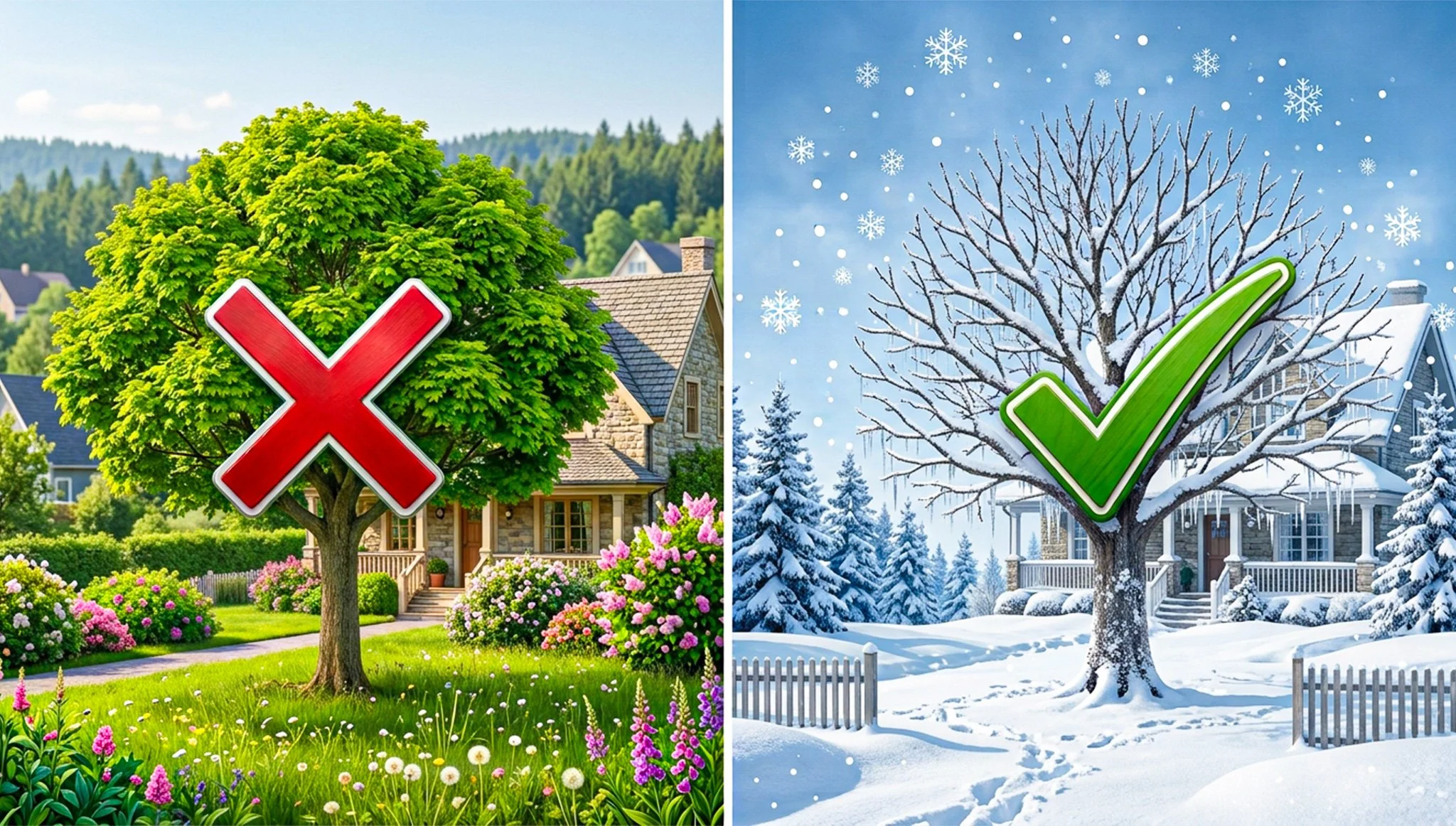
When most people think about tree removal, pruning, or yard work, they naturally picture warm, sunny summer days. It makes sense—summer is when we’re spending time outside looking at our landscaping.
However, assuming tree work must wait until fair weather is one of the most common (and costly) misconceptions homeowners and property managers make.
The reality is that winter isn't just an "off-season" option—it is often the most efficient, property-friendly, and cost-effective time to get tree work done.
Here is why scheduling your tree service in the winter can save you money, protect your landscape, and give you better results.
1. Lower Costs and Better Logistics
Executing large-scale tree removals in the summer requires significant ground-protection logistics. To avoid damaging delicate lawns, flowerbeds, or underground infrastructure like leach fields, tree crews often have to lay down dozens of plastic ground mats just to move heavy equipment across a yard.
In the winter, frozen ground acts as natural armor for your yard.
Fewer mats required: Hard, frozen turf reduces the labor and time needed to set up heavy ground mats.
Safer equipment access: Crews can maneuver machinery closer to the target trees without tearing up soft soil.
Faster cleanup: Sawdust, twigs, and debris rest on top of snow or frozen ground, making cleanup drastically faster than raking wood chips out of thick summer grass.
Because jobs run smoother and faster in frozen conditions, labor hours decrease—allowing tree care companies to pass those efficiency savings directly onto you.
2. Minimal Impact on Landscaping & Gardens
If you have established perennial beds, ornamental shrubs, or delicate garden features near a tree that needs to come down, summer work requires extreme caution and extra rigging to avoid crushing plants in full bloom.
By contrast, winter landscape conditions work in your favor:
Perennials and gardens are cut back or dormant.
Turfgrass is dormant and less susceptible to root compaction.
Deciduous trees have dropped their leaves, making structural branches clearer to evaluate and lighter to manage.
3. Predictable Wood Behavior and Faster Work
Weather like high winds or severe lightning will pause tree work regardless of the month, but cold temperatures and snow don't stop professional arborists. In fact, cold weather creates ideal conditions for cutting:
Consistent Wood Mechanics: In warmer months, fluctuating moisture levels and internal sap flow change how branches flex, swing, and react when cut. In the winter, frozen wood behaves consistently and predictably, making rigging and branch removal safer and more straightforward.
Streamlined Scheduling: Winter scheduling often offers tighter timeframes, making it easier to bundle neighborhood jobs together and split equipment transit costs.
4. You Capture 100% of the Next Growing Season
If you wait until late spring or mid-summer to remove a shade tree blocking your garden or lawn, you miss out on a huge chunk of the growing season. Wet, muddy spring conditions often delay heavy equipment anyway.
Removing problem trees during the winter ensures that when spring arrives, your lawn, vegetable garden, or new plantings get uninterrupted access to sunlight from day one. You get the full spring, summer, and fall seasons to enjoy the benefits of added light and expanded space.
5. Better Budget Management for Associations and Commercial Properties
For HOAs, condo associations, and commercial property managers, summer is typically the most expensive time of year. Summer budgets are crushed by concurrent costs: lawn mowing, paving, sealcoating, roofing repairs, and general exterior maintenance.
Moving tree care into your winter maintenance plan accomplishes two major financial goals:
Flattens the Budget Curve: Spreads major capital outlays evenly throughout the year rather than spiking expenses during the summer months.
Stretches Your Dollar: Takes advantage of winter operational efficiencies so your property gets more total work completed for every dollar spent.
Ready to Plan Ahead?
Tree work doesn't stop when the leaves fall. If you have hazard trees, overgrown limbs blocking light, or clearing projects on your horizon, holding off until summer might mean paying more for a harder job.
Considering tree work this season? Contact Top Branch Tree Service to discuss your property needs and discover how winter scheduling can work for you.